Begin with the right expectation
Khagrachari is home to diverse Indigenous communities as well as Bengali residents, and no single meal, garment or craft can represent everyone. Recipes vary by household, market, season, faith, community and available ingredients. Treat labels in travel posts as a starting question, not a final authority.
A useful visitor goal is simple: enjoy food prepared for sale, ask what it contains, pay the stated or agreed price, and avoid turning private homes or ordinary work into a spectacle. For a broader introduction, continue to the culture and food overview.
What you may encounter on the plate
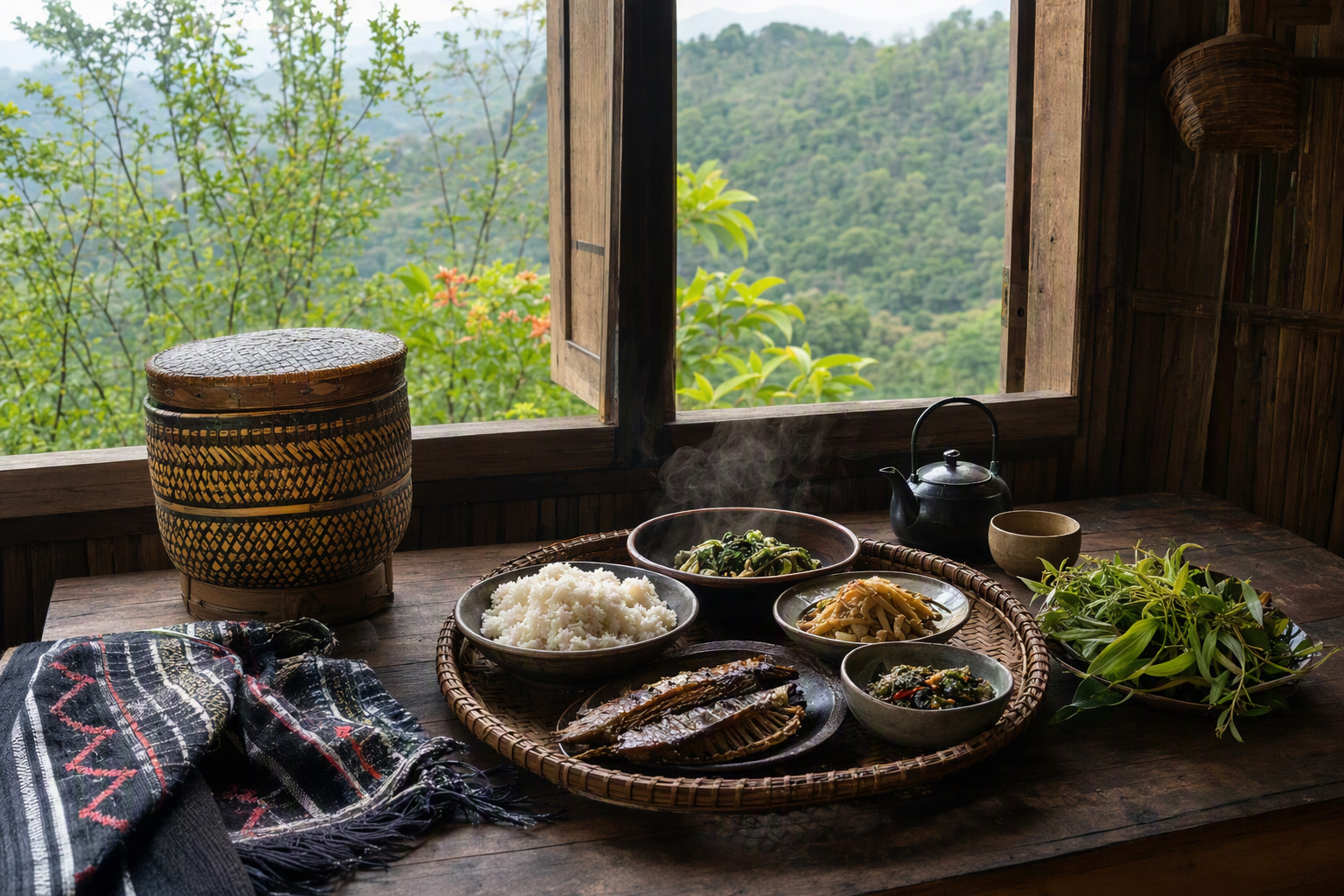
Across the Chittagong Hill Tracts, visitors often encounter rice-centred meals, seasonal leafy greens, bamboo shoots, fish or meat, dried or fermented ingredients, chilli, herbs and preparations cooked with relatively direct flavours. Availability is not guaranteed, and the same dish name can refer to different methods.
Rather than arriving with a checklist, ask three practical questions: “What is fresh today?”, “What ingredients are in this?”, and “How spicy is it?” A restaurant serving local-style dishes may adapt them for its own kitchen. That does not make the meal a definitive version of any community’s cuisine.
For dietary needs
- Explain allergies clearly and name the ingredient, not only a broad diet label.
- Ask whether dried fish, shrimp paste, meat stock or shared cooking oil is used.
- For vegetarian or vegan meals, confirm each dish rather than assuming vegetables are cooked separately.
- If a severe allergy is involved, carry suitable backup food and medication.
How to navigate a market
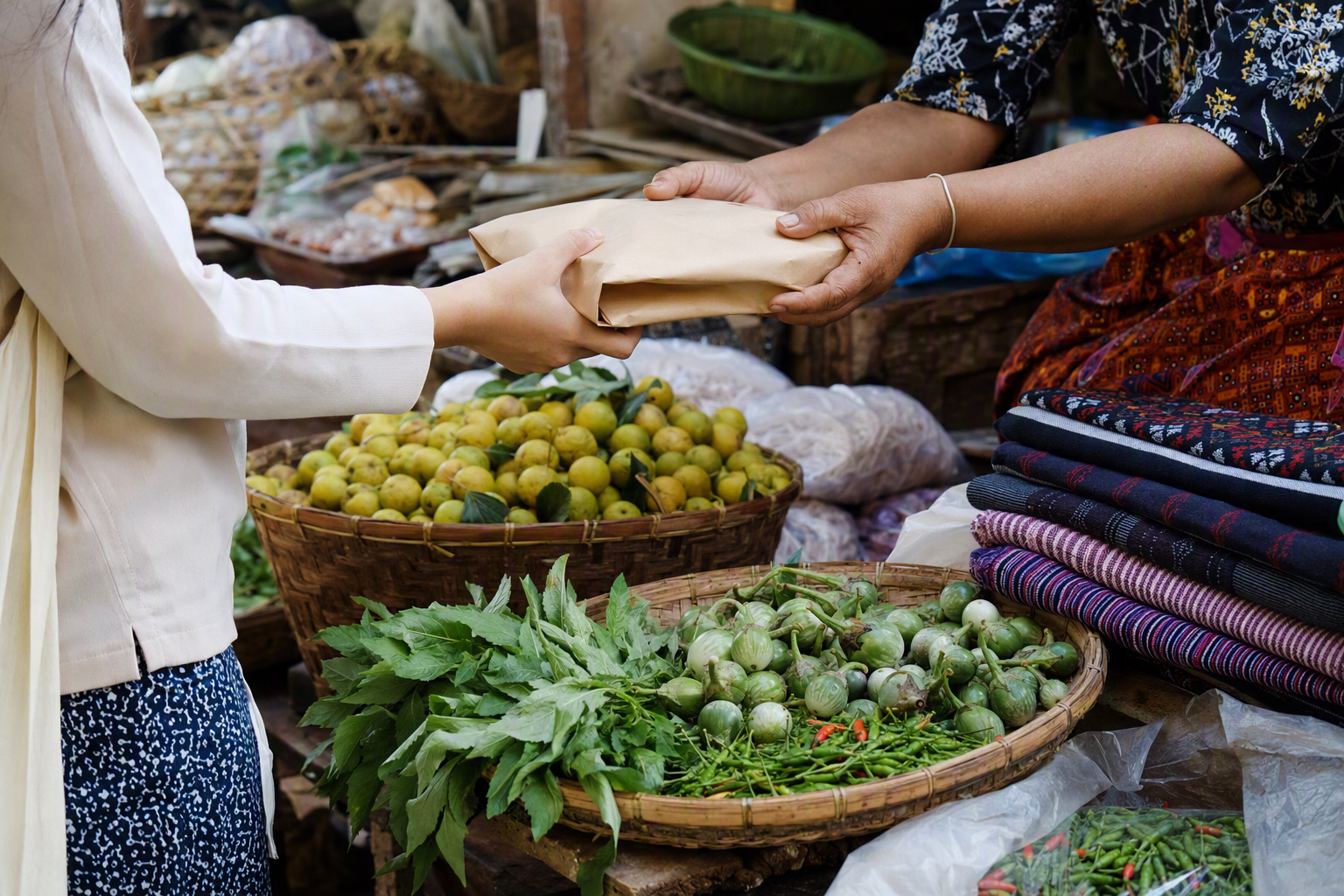
Markets can be one of the most informative parts of a Khagrachari visit because they show seasonal produce and everyday exchange. Walk at the edge of active transactions, keep pathways clear and ask before handling unfamiliar goods. If you want to photograph a stall or person, request permission first and accept “no” without negotiation.
Prices, product availability and market patterns change. Ask the current price before ordering or taking an item, and avoid aggressive bargaining over small amounts. If a packaged food, medicine or preserved product matters for dietary or safety reasons, read its label and expiry information where available.
Crafts and textiles: buy the object, not a story you invented
Woven textiles and bamboo or cane objects may carry practical, artistic and cultural meaning, but provenance should come from the maker or seller. Ask who made it, what material it uses and how it should be cared for. Do not present a purchase as an “authentic ceremonial item” unless that description has been clearly and appropriately supplied.
Be cautious with old, sacred, archaeological or wildlife-derived objects. If an item’s sale or transport seems questionable, leave it. A respectful souvenir should support ordinary, transparent trade rather than remove something from a community context.
Photography, invitations and community spaces
- Ask before photographing a person, child, home, place of worship, ceremony or workshop.
- Permission to enter is not automatically permission to publish images.
- Do not fly a drone without current legal permission and explicit local consent.
- Dress and speak in a way that suits a shared public space; follow host guidance at religious or cultural sites.
- If invited to taste something, it is acceptable to ask about ingredients or politely decline.
- Do not schedule a private “cultural show” unless it is a legitimate, invited and fairly arranged public offering.
A simple food-focused half day
| Moment | Purpose | Visitor practice |
|---|---|---|
| Morning market | See seasonal produce and everyday trade | Keep pathways open; ask before photos |
| Late breakfast or lunch | Order a small range of available dishes | Confirm ingredients, spice and price first |
| Craft stop | Learn about material and making | Ask provenance; buy without inventing claims |
| Town walk or viewpoint | Connect food with the wider landscape | Leave no waste and respect private space |
Pair this with the Khagrachari Markets and Viewpoints guide. Keep the timing flexible because the best food choice depends on what is actually available that day.
Useful phrases and questions
English may not be the language used in every interaction. A guide, host or Bengali-speaking companion can help with ingredients and consent. Even when translation is available, point to the item and repeat critical allergy information. A smile does not replace a clear yes to a photograph.
What responsible curiosity looks like
Responsible curiosity is specific and modest. Ask how a vegetable is cooked, who made a textile, or whether a dish is available today. Avoid asking strangers to explain an entire community, reenact a tradition or pose as a cultural subject. The richest encounter may simply be an ordinary meal served well.